
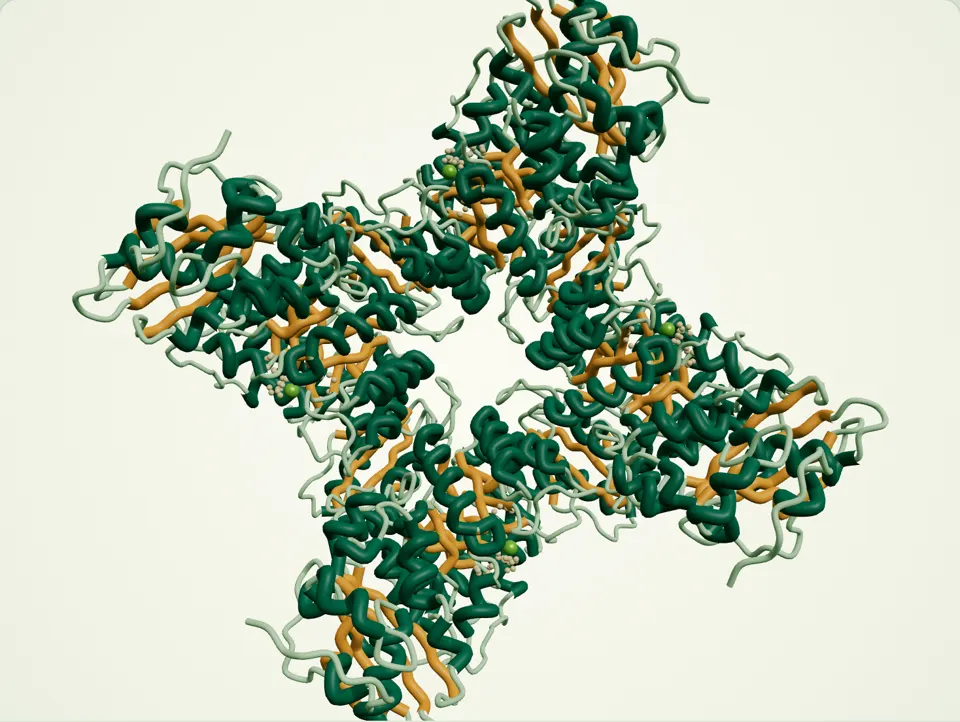
What rubisco protein is and where it comes from
Rubisco protein is the purified form of ribulose-1,5-bisphosphate carboxylase/oxygenase, the enzyme at the centre of carbon fixation. It is widely described as the most abundant protein on Earth, and one analysis cited in a recent review estimated about 0.7 gigatonnes of it on the planet, mostly in leaves.
Almost all plant protein in the human diet comes from seeds, so leaves are an unusual raw material. They hold less protein per kilogram than seeds, which forces processors to handle large biomass volumes. The material also degrades quickly, so leaf protein plants need to process harvested crops within a short time and keep the juice cool.
Rubisco protein is not tied to one crop. Alfalfa, sugar beet leaves and duckweed all appear in the literature as sources. Because the large subunit is highly conserved, reviewers expect purified rubisco isolate to show a similar nutritional profile whichever plant it comes from, which gives buyers some freedom to choose a feedstock for agronomic or regional reasons.
Extraction and isolate purity
Extraction begins with disruption. The cell walls are broken and the chloroplast ruptured, then the green juice is separated from fibre. A review of rubisco as a food protein stresses that the protein must also be separated from chlorophyll and then concentrated, since pigment, phenolics and other leaf compounds affect colour, flavour and aroma.
Modern routes use filtration and drying. In the FDA record for one Lemna leaf protein, the filtrate is sterilised by microfiltration, an ultrafiltration step removes salts and excess water, and the final concentrate is freeze dried or spray dried. Such gentle handling preserves solubility, which is central to the functional appeal of rubisco protein.
Purity is defined by specification. The notified product has a protein specification of at least 80 percent, with moisture at or below 10 percent, ash at or below 4.5 percent, dietary fibre at or below 15 percent and fat at or below 0.5 percent. Rubisco accounts for 74 percent of total protein mass, so the remainder is other leaf proteins.
Oxalic acid is the notable leaf-specific parameter. The specification caps it at 0.1 percent, and the same document lists limits for arsenic, cadmium and mercury. Buyers of leaf-derived isolates should read the certificate of analysis for oxalate, heavy metals and pigment, since these differ more by feedstock and process than they do for seed proteins.
Nutrition and amino acid profile
Rubisco isolates are rated as nutritionally complete. A review compared an alfalfa rubisco with soy isolate, whey isolate, egg white and beef, expressed as milligrams of amino acid per gram of protein. The alfalfa material supplied 38.7 of histidine against 26.0 for soy, 48.6 of isoleucine against 48.0, and 93.0 of leucine against 77.0.
That profile is why the review rates rubisco on a par with many animal proteins and superior to many other plant proteins, and calls purified isolates easily digestible. Published digestible indispensable amino acid scores for commercial rubisco isolates are not yet as widely reported as for pea or soy, so measured data are worth requesting.
The Lemna notice shows the same pattern in a different crop. The notifier presented the amino acid profile of its leaf protein and compared it with profiles of other duckweeds and other food-derived proteins, which suggests that the nutritional case rests on measured composition rather than on assumptions. A food technologist should still check digestibility on the final matrix.
Rubisco protein functionality
Functionality is the commercial headline. The same review reports that purified rubisco isolates have excellent foaming, gelling and emulsifying properties, which matter because plant proteins often lack the solubility and the ability to form gels and foams that animal proteins offer. Those traits make rubisco a candidate to replace egg white, dairy protein or gelatin in some recipes.
The Lemna leaf protein notice lists the same functions as intended uses: an ingredient, an emulsifier, a gelation agent or thickener and a source of protein, within maximum levels specified in the notice and excluding infant formula and products under USDA jurisdiction. That scope is a useful guide to where the manufacturer sees the strongest performance in food systems.
Because functionality depends on native structure, process history decides whether the claim holds. Heat, extreme pH and drying conditions can denature rubisco and cost solubility, which is why gentle membrane steps and spray drying are favoured. Developers should test gel strength, foam overrun and emulsion stability on the grade they intend to buy, at their pH and salt level.
Applications and uses
Egg replacement is the most discussed use. A protein that gels on heating and foams on whipping can support plant-based scrambles, baked goods, meringue-type foams and binders. Teams developing such products usually compare rubisco with pea protein and other legume proteins, which are cheaper but less functional, to decide where a premium ingredient earns its place.
Beverages and dairy alternatives use rubisco for protein fortification and for emulsion stability, which gives formulators a second reason to test it beyond egg replacement. Because the isolate dissolves well, it suits clear or lightly coloured drinks better than many seed proteins, at least in principle. Sports nutrition is a possible market, since nutritional completeness supports positioning against whey.
Leaf protein also connects to other aquatic and green sources. Duckweed is one of the better-documented rubisco-rich crops, and readers comparing it with algae can read spirulina for a very different, pigment-rich green protein. Mixed formulations that include rubisco alongside cereal or legume proteins can raise gel quality without relying on a single supplier.
Regulatory and allergen status
In the United States, the FDA closed GRN 001256 on 5 February 2026 with a no-questions letter for Lemna leaf protein from Plantible Foods. The notice was a resubmission of GRN 001160, which had been closed in May 2024 at the notifier’s request. The letter excludes infant formula, foods for infants and toddlers and products under USDA jurisdiction.
In the European Union, EFSA published an opinion in 2023 on water lentil protein concentrate from Lemna gibba and Lemna minor, concluding that it is safe as a novel food under the proposed conditions of use. The panel judged the allergy risk low. That ingredient differs from a purified rubisco isolate, so each source needs its own file.
Allergen risk is generally low because rubisco is a ubiquitous plant enzyme, but any new protein source is assessed on a case-by-case basis. Companies should request allergen statements, and check whether the isolate carries contaminants from the feedstock such as oxalate or pigments. Labelling follows the naming given in each authorisation or notice.
Sourcing and supply
Supply of rubisco protein is still emerging. A review of rubisco as a food protein noted that many commercial plants were being established, with more than 60 million United States dollars of funding invested at the time of writing. The Lemna notice shows one pathway, in which a controlled-environment duckweed crop supplies leaf protein with a defined composition.
Questions for suppliers should cover feedstock, harvest and processing time, extraction route, protein purity, rubisco share, heat history, oxalic acid and heavy-metal data, and the regulatory file for each market. Ask whether the product is a concentrate or an isolate and request functional data such as gel strength and foam stability at stated pH values.
Volume is the main constraint compared with pea or soy, and price follows it. Developers therefore use rubisco where it adds a function cheaper proteins cannot, and keep a fallback formula. Pilot runs with at least two lots are advisable, because functionality figures depend heavily on the extraction route and should not be assumed from one plant to another.