
What egg white protein is
Egg white protein is the protein of the albumen, the clear part of the hen’s egg. It is sold as liquid egg white, pasteurised or frozen, and as spray-dried powder. In ingredient work it is the reference protein for foaming and gelling, and the benchmark that plant and fermentation-derived alternatives are judged against.
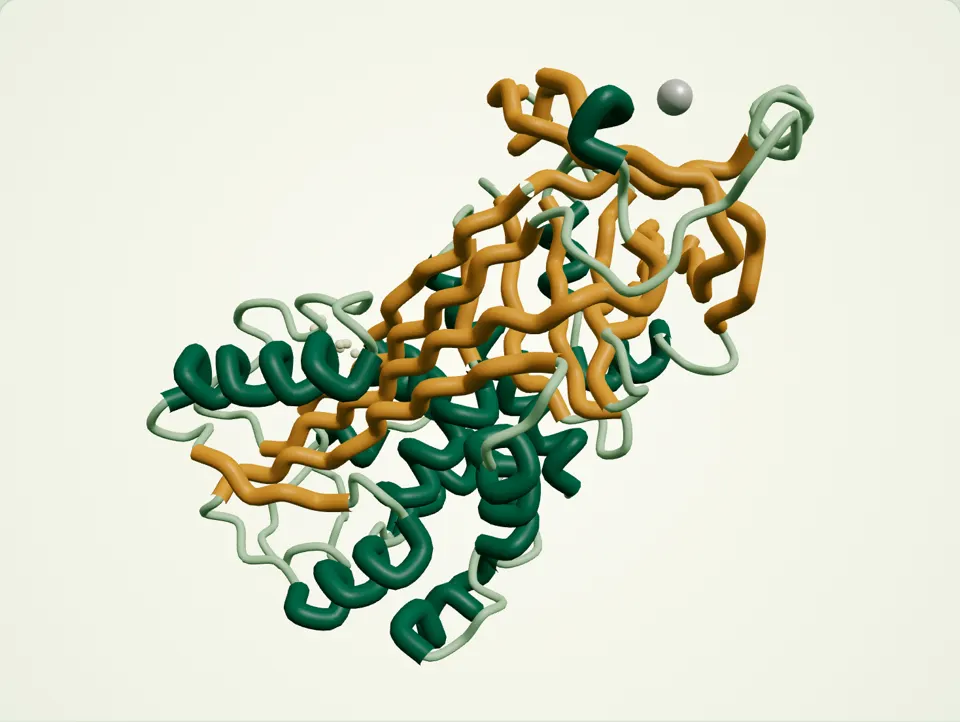
The proteins are few and well characterised. Ovalbumin, ovotransferrin and ovomucoid make up approximately 75 percent of total egg white protein, according to proteome work, with lysozyme and ovomucin as further components. This simple composition explains why egg white behaves consistently in foams and gels, and why it is a good target for recombinant production.
Powder is concentrated. USDA lists dried egg white at 79.9 g protein per 100 g in its Foundation data and 81.1 g in the SR Legacy data, while stabilised, glucose-reduced dried products reach up to 84.1 g. The rest is mostly moisture, ash and small amounts of carbohydrate, and almost no fat.
Producers pasteurise liquid egg white and often remove glucose before drying to avoid browning during storage. Drying conditions influence solubility and whipping performance, so powders are graded by gel strength and foam volume. A buyer should specify the whipping and gelling tests as well as protein, moisture and microbiological limits.
Egg white protein nutrition and quality
Egg white protein sets the nutritional benchmark. A 2020 review of pig ileal digestibility data calculated a mean digestible indispensable amino acid score of 101 for egg protein on the pattern for children aged 0.5 to 3 years, with no limiting amino acid, and placed egg with pork meat, casein and potato protein in the excellent category.
The same table marks no limiting amino acid for egg, so every indispensable amino acid is supplied at or above the reference requirement. Egg can therefore complement low-scoring proteins in a mixture, but a blend cannot be inflated beyond the cap of 100 for nutrition claims, so developers should use uncapped scores for blend design only.
Egg white is low in fat and carbohydrate, which makes it a lean source of protein for sports nutrition and weight-control products. It is also very low in micronutrients compared with whole egg, since most vitamins and minerals sit in the yolk. A formulator who wants a complete nutritional profile adds the missing nutrients separately.
For plant-based formulations, the benchmark is demanding. Soy, pea and potato proteins can mimic parts of egg white function, and potato protein matches its amino acid quality. The comparison with a dairy protein is covered in egg white protein vs whey protein, and the nutritional neighbour in the plant group is potato protein.
Gelation, foaming and functionality
Gelation is the signature property. On heating, ovotransferrin, lysozyme and ovomucin help form the early gel skeleton, and ovalbumin builds the network through disulphide bonds. Gel strength can be modified: ultrasound at powers up to 360 W increased soluble protein, surface hydrophobicity and disulphide bonds, and produced denser, stronger gels in laboratory work.
Foaming is equally important. Egg white forms stable foams at low protein concentration, which supports meringues, mousses, angel food cake and marshmallows. Foam volume and stability depend on pH, sugar, fat contamination and the heat history of the powder, so recipes include controls for bowl cleanliness, whipping time and stabilisers such as acid or salts.
Solubility is high and viscosity is modest, which allows egg white to be dispersed easily in beverages and shakes before it is heated. After pasteurisation and drying, the protein remains largely native, and denaturation occurs only on the heating step in the final product, where gel formation locks the structure in place.
These properties explain why alternatives focus on foam and gel. Mung bean and potato proteins gel and foam, and recombinant ovalbumin is intended to reproduce the same function. A fair test compares foam overrun, drainage, gel strength at defined temperature, and cooked texture against a pasteurised egg white control in the actual recipe, because laboratory model systems often mislead.
Allergens and heat
Egg is a major allergen. United States law names eggs among the nine major food allergens, and EU law requires eggs to be emphasised in the ingredient list. Egg white proteins are the main cause, and the allergen must be declared on the label whatever form of egg white is used in the product.
Heat changes reactivity unevenly. In a study of fried, boiled and baked egg white tested with sera from egg-allergic patients, boiling for 30 minutes gave the largest reduction in ovalbumin reactivity and ovotransferrin activity nearly disappeared in most heated samples, but ovomucoid antigenic activity did not fall in any of them. Time mattered more than temperature.
Processing studies are not simple to generalise. A review of precision fermentation proteins points out that heating can reduce IgE reactivity when conformational epitopes are destroyed, while milder heating may transiently increase antigenicity, and that effects measured for native egg proteins cannot be assumed to transfer to recombinant equivalents without matched comparisons.
For manufacturers the rule is simple. Treat any egg white ingredient, including recombinant copies of egg proteins, as an egg allergen, apply allergen controls and cleaning validation, and declare it on the label. Avoid claims that imply a product is suitable for egg-allergic consumers unless it contains no egg protein of any origin.
Regulation and fermentation-derived egg white
Conventional egg white is an established ingredient, so regulatory work centres on food safety, microbiological limits, pasteurisation and allergen labelling. The EU and the United States both require declaration of egg, and standards of identity or quality grades may apply to egg products in each market, so suppliers should document them.
Precision fermentation has produced egg protein copies. FDA closed GRAS Notice 1104, for egg-white protein produced by Komagataella phaffii ATCC GSD-1235, with a no-questions letter on 17 October 2023. The notice was submitted by The EVERY Company and covers use as a substitute for egg-white protein in foods, as a protein source and as a wine fining agent.
A second recombinant ingredient followed. GRAS Notice 1249, for ovalbumin produced by Trichoderma reesei ATCC 13631, received a no-questions letter on 16 September 2025, with use as a source of protein and as a foaming, gelling and binding agent at 3 to 25 g of ovalbumin per 100 g across many foods. The notifier was Onego Bio.
A 2026 review notes that recombinant beta-lactoglobulin and ovomucoid have received regulatory approval in the United States, and that eleven precision fermentation notices had received no-questions letters as of 1 September 2026. The proteins are designed as exact structural copies, so they stay allergens, and safety assessment centres on equivalence to native proteins.
Egg white protein compared with alternatives
Against whey protein, egg white offers stronger gelation and foaming, a complete amino acid profile and no lactose, whereas whey is more soluble in clear acidic drinks. Both are animal allergens. For recipes that need heat-set structure, egg white is the standard, and for beverages whey usually leads. See whey protein.
Against plant proteins, egg white sets a high bar. Blends of mung bean protein and potato protein gel and foam, and recombinant ovalbumin aims to close the gap while keeping the allergen. Developers should choose by function, allergen strategy and regulatory market, and confirm with side-by-side recipe trials against egg white.